
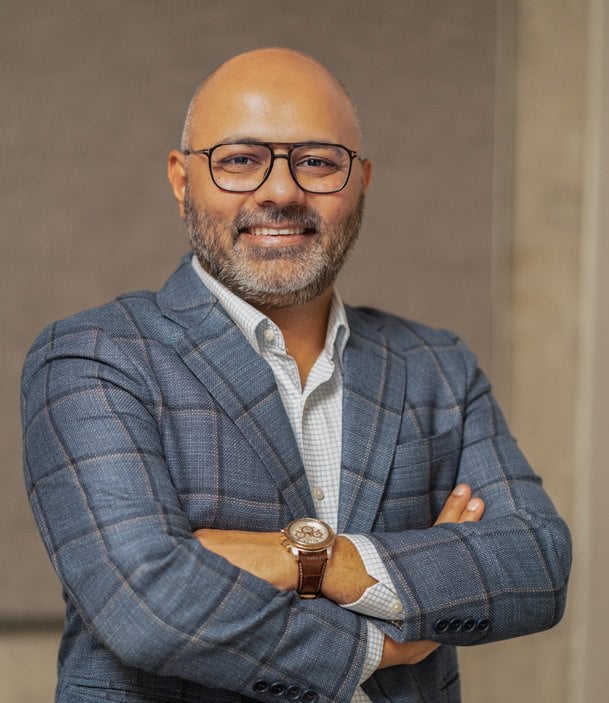
Managing Director, Shah investor’s Home Ltd.
The investment world is undergoing a structural transformation. The advantage once came primarily from having access to information; today, the real advantage lies in how quickly, deeply and systematically that information can be processed.
Artificial intelligence is accelerating this transition. Global corporate investment in AI reached $581.7 billion in 2025, rising nearly 130% year-on-year, while private investment in AI increased by 127.5%. The implications for investors are significant, marking an important shift in investment research.
An analyst can study financial statements, industry trends and management commentary, but technology can now help process thousands of data points, identify patterns and continuously monitor investment parameters.
SIHL’s AIF offering is built around this evolution. It combines technology with systematic research frameworks to make investment analysis more structured and data-driven. Its long-short strategy aims to identify businesses with strong earnings potential while using market hedges to manage a portion of systematic risk.
However, listed markets represent only one part of the investment universe. AIFs offer the flexibility to invest in select private and pre-IPO opportunities, where information asymmetry and early access can potentially create value before these businesses become publicly listed. In such opportunities, detailed due diligence and a thorough understanding of business economics are essential for identifying potential growth stories.
The AI transition is also accelerating the adoption of algorithmic trading, with the global trading landscape increasingly being driven by algorithms rather than manual decision-making. The IMF estimates that approximately 70% of equity trading in the United States is now algorithmic, reflecting the growing importance of speed, data and systematic execution.
India is moving in the same direction. NSE data showed that algorithmic trading accounted for 57% of equity cash-market trades and 70% of futures and options trades in 2025. Meanwhile, SEBI has introduced a dedicated framework to facilitate safer retail participation in algorithmic trading.
The next phase is therefore not merely about automation—it is about making systematic, rule-based trading accessible beyond institutional trading desks.
This is where SIHL Algo fits into the evolving ecosystem. By converting predefined trading rules into systematic execution, it can help reduce emotional intervention, improve discipline and enable more consistent decision-making.
As markets become faster and more data-intensive, algorithmic investing is increasingly becoming an important component of modern trading infrastructure.
However, the transformation does not stop at how we invest—it is also changing where investment opportunities emerge.
Global market leadership operates like a relay. Over the past three decades, US technology, Chinese industrialisation, US digital platforms and, more recently, global AI infrastructure have created distinct waves of economic and market opportunities.
Importantly, these cycles rarely belong to a single country. China’s industrial boom benefited global miners and commodity producers, while today’s AI cycle spans US technology companies, Korean memory-chip manufacturers, Japanese semiconductor-equipment providers and global infrastructure businesses.
For Indian investors, the lesson is not to choose between India and the rest of the world, but to participate in multiple earnings cycles. Global diversification can provide access to businesses, sectors and technological themes that may have limited representation in the domestic market, while potentially offering an additional source of returns.
SIHL’s Global Investment Service helps investors access these international opportunities, complementing their exposure to India with participation in global growth engines.
The future of investing is therefore becoming less about choosing a single asset or market and more about building the right investment architecture—one that combines research, technology, risk management, alternative strategies and global opportunities.